Polymarket’s order book, without the mystery
A Polymarket price is not one number. It is a bid, an ask and a pile of resting orders. Here is how to read the parts that matter before you trust a spread.
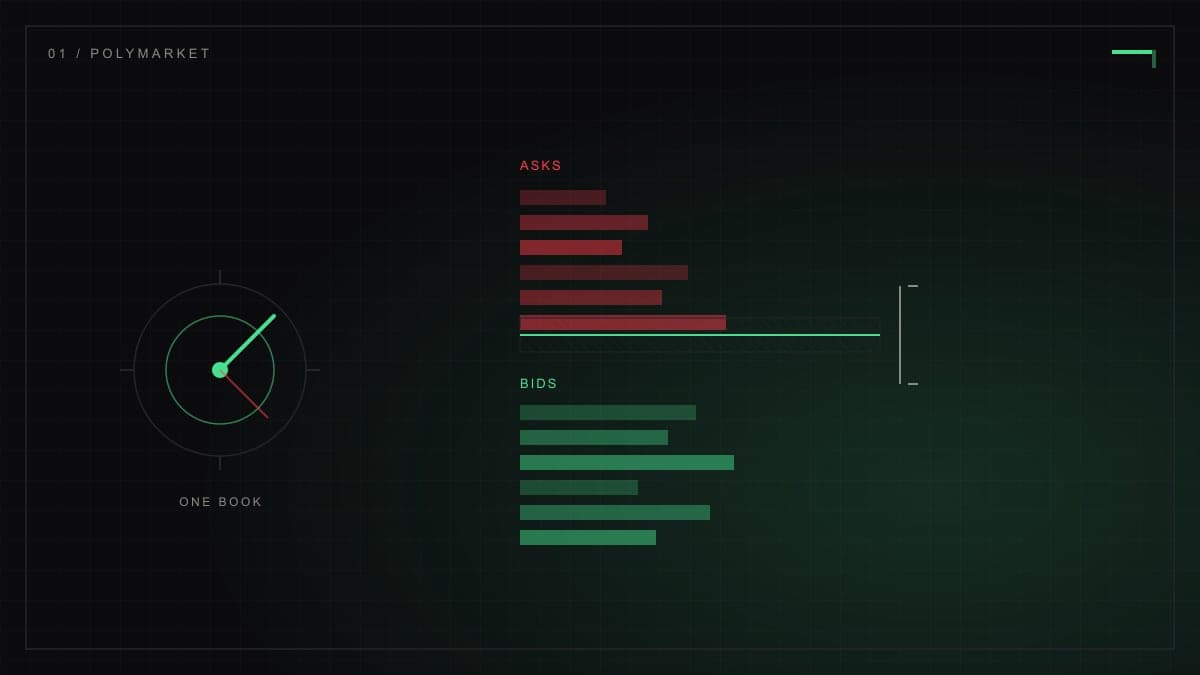
When someone says “Polymarket says 62%”, they usually mean the last trade or the midpoint. Neither is what you pay. If you buy YES, you pay the best ask. If you sell, you hit the best bid. The gap between them is the spread, and on a quiet market it can be wider than the cross-venue edge you are chasing.
Three prices, one market
- ▪Best bid: the highest price someone will pay for YES right now.
- ▪Best ask: the lowest price someone will sell YES for.
- ▪Midpoint: the average of the two. Fine for a chart, useless for a fill.
The scanner reads the ask, not the midpoint. It also reads the NO side. On Polymarket, buying NO is not a separate book in the way you might expect: it is the other side of the YES book. A NO ask near 29¢ means someone is bidding about 71¢ for YES. That sounds backwards, and that is the point. The two sides are connected.
Why the last trade lies
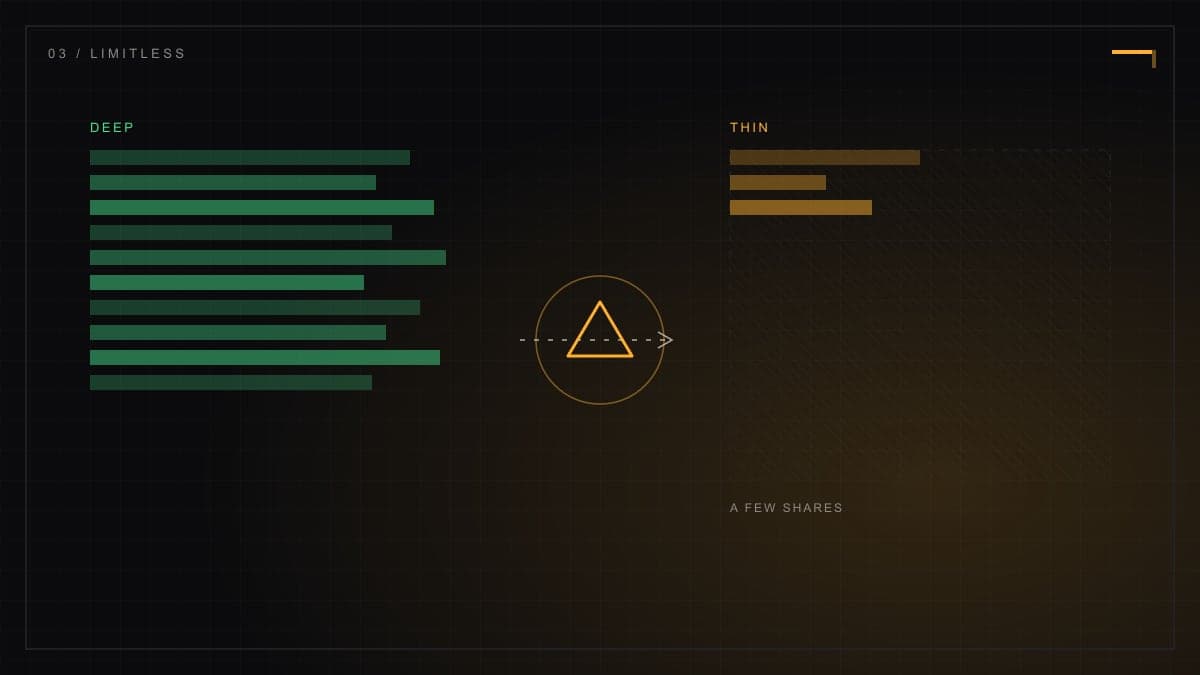
A thin market can print one trade at 90¢ and leave the next ask at 94¢. The chart says 90. Your order pays 94. On a two-leg pair, a few cents on one side can erase the whole edge. That is why every price in the scanner has a dollar amount next to it: it is the size available at that quote, not the total volume of the market.
Depth is the other half of the price
Suppose YES on Polymarket is 41¢ and NO on Kalshi is 55¢. The pair costs 96¢, which looks like a 4.2% return before fees. But if only 20 shares are offered at 41¢, a $1,000 order will walk the book and pay more. The scanner caps profit at the quoted depth. If the cap is $8, the trade is an $8 trade, not a $42 trade.
This is also why we do not hide thin pairs behind a single “best ROI” number. A 20% spread with $5 of liquidity is not better than a 3% spread with $500. It is a different trade.
What to check before you click
- ✓Is the ask still there? Quotes move between the scan and your order.
- ✓How many shares are quoted at that ask?
- ✓Does the NO leg have matching depth?
- ✓Do both markets resolve on the same date and time zone?
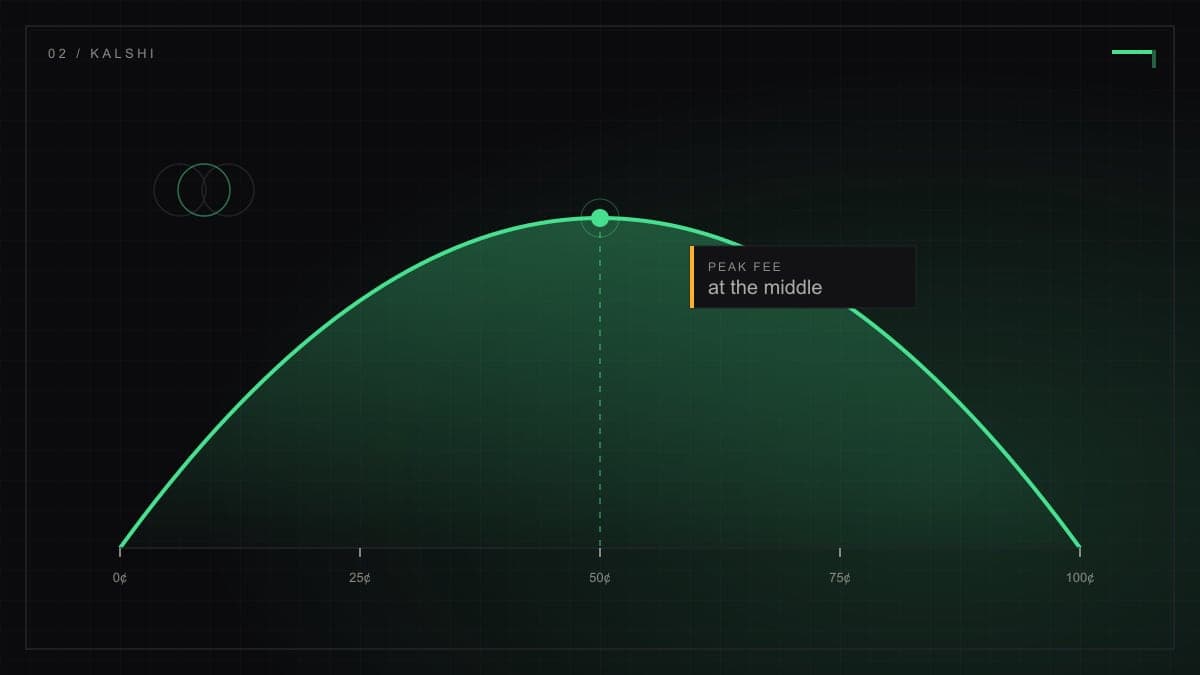
- ✓What does each venue charge on this market?
If the answer to any of those is “I don’t know”, the spread is not ready. The scanner can find a price difference. It cannot read the rules for you, and it cannot fill the order.
None of this makes Polymarket special. Every venue has an order book, a fee schedule and a rulebook. Polymarket is just the one where the gap between the chart and the fill is easiest to miss.
The team behind the scanner. We write about cross-venue pricing, resolution rules and the mechanics of locking in spreads on prediction markets.